

Mike Bygrave
Mike Bygrave is Director at Roseview Windows and a highly respected figure in the UK sash window industry. Having led the business for many years, he has been instrumental in shaping its direction and establishing Roseview as a leader in timber-alternative sash windows.
Mike’s experience spans both traditional design and modern manufacturing, giving him a unique perspective on how sash windows have evolved and where the market is heading today.
09/01/2026
Seven Things Conservation Officers Look For
…and which ones you can do something about.
Ask installers what the key thing conservation officers want from replacement sash windows and most will answer with “material”. Timber over uPVC; conversation over.
That is rarely how the assessment works, so treating it that way loses jobs that were winnable.
Whether permission is needed at all is a local question. Conservation area designation does rely on one national rule, an Article 4 direction changes what is permitted in a specific area or even in a specific building, and two houses on the same street can end up with different answers. We have set all that out on our Conservation and Planning page.
This is about the other half. What is an officer actually looking at?
It starts with proportion
Before anything else, the eye reads window shape.
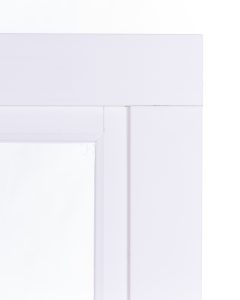
A traditional sash window has a particular relationship between the upper and lower sash, and between the glass and the frame around it. Get that wrong and no amount of detailing rescues it. An officer may not describe it in those terms. They are more likely to say the window “doesn’t match the original”, which is maddening to hear when you are trying to price a job, but it is usually proportion they are responding to.
Where the meeting rail sits and how wide it is does more work here than almost anything else. Original timber sashes have a narrow meeting rail, and the eye is calibrated to it regardless of whether the person looking knows why. A wide rail reads as modern immediately. Ultimate Rose uses a 35mm external midrail, which is why it holds up under this kind of scrutiny.
The external midrail sits in front of a 45mm internal midrail, giving a 10mm step (which is essential for weatherproofing). The size of that step is where a lot of modern sash windows give themselves away. Once it gets past about 15mm it is clearly visible, looks out of place, and undoes what the slim front rail was trying to achieve.
Sightlines matter for the same reason. More frame means less glass, and a window with visibly less glass than its neighbours announces itself from across the road.
What you can influence: a great deal, through your product choice.
Then the detail, at about a metre
Conservation officers get close. Expect them to.
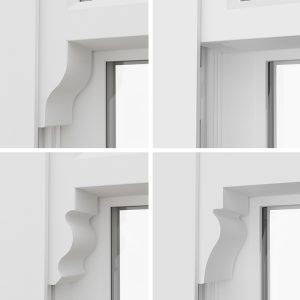
The corner joint is the first thing that gives a window away. A welded joint leaves a visible seam running at 45 degrees. A true mechanical joint does not. Ultimate Rose uses genuine mechanical joints, oriented the way a joiner would have made them; vertical on the sashes and horizontal on the frames. At the distance an officer will be standing, that difference is not subtle.
The sash horn is next. On an original window the horn is part of the sash rather than something added afterwards, and applied horns tend to look exactly like what they are. Run-through horns are made as part of the sash. Which style suits the property is a question of history and preference: Ultimate Rose offers three, Dolphin, Seahorse and Emperor, plus a no-horn option for the properties that never had them. Fitting a Victorian horn to a Georgian elevation is the kind of detail that gets picked up.
Watch out for obvious wraparound horn caps, with an obvious rounded edge wrapping over the front face of the sash horn. Even on a run-through horn they are a real giveaway that the window is uPVC, and the officer will spot them.
Glazing bars are where a lot of otherwise good windows fall over. Bars taped to the surface of a sealed unit tend to look like they were applied afterwards. Roseview uses a full-length aluminium astragal carrier system instead, which produces a bar that is properly fixed and carries the right gapless shadow line.
Surface and finish carry more weight than people expect. A high-gloss white window looks like plastic in daylight regardless of how well it is proportioned. Foiled and chalk-style finishes read far closer to painted timber.
What you can influence: all of it at specification stage, none of it once the window is made.
How it sits in the reveal
This one is yours, not ours.
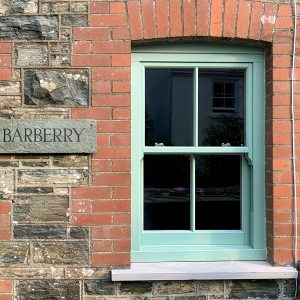
The depth of the reveal changes how a window reads more than many installers expect. A sash window set too far forward in the opening loses its shadow, and the elevation flattens out. Original windows sit back. If the new frame sits proud of where the old one did, the officer will probably notice.
The same goes for the cill line and how the frame meets the brickwork. A deep cill helps. So does resisting the temptation to pack a frame forward to make fitting easier.
What you can influence: everything. This is a survey and installation question, and no manufacturer can fix it for you.
What to do before you quote, not after
The sequence matters more than the paperwork:
-
- Check the designation and check for an Article 4 direction.
Both should be on the local authority’s website, and take minutes to look up. - Talk to the planning department before you price the job.
Not after you have won it. An officer who has been asked for a view early is a different proposition to one presented with an unapproved fitted window. - Put a physical sample in front of them.
This is the single most useful thing you can do. Photographs of uPVC sash windows can be good, especially if they are relevant to the area, and technical drawings help. But a sample is a different conversation, because the joint, rail and finish are all right there. - Do not promise an outcome to the homeowner.
Requirements vary by authority and by officer, and the decision is not yours to give.
- Check the designation and check for an Article 4 direction.
How we can help you
We can provide technical drawings, close-up photography, samples and someone to talk it through with before you commit to a price.
We cannot get a window approved. What we can do is make sure the product in front of the officer is the right one, and that you have the detail to explain why.
If you have a conservation job you are not sure about, get in touch with us before you price it.
Tags: conservation